
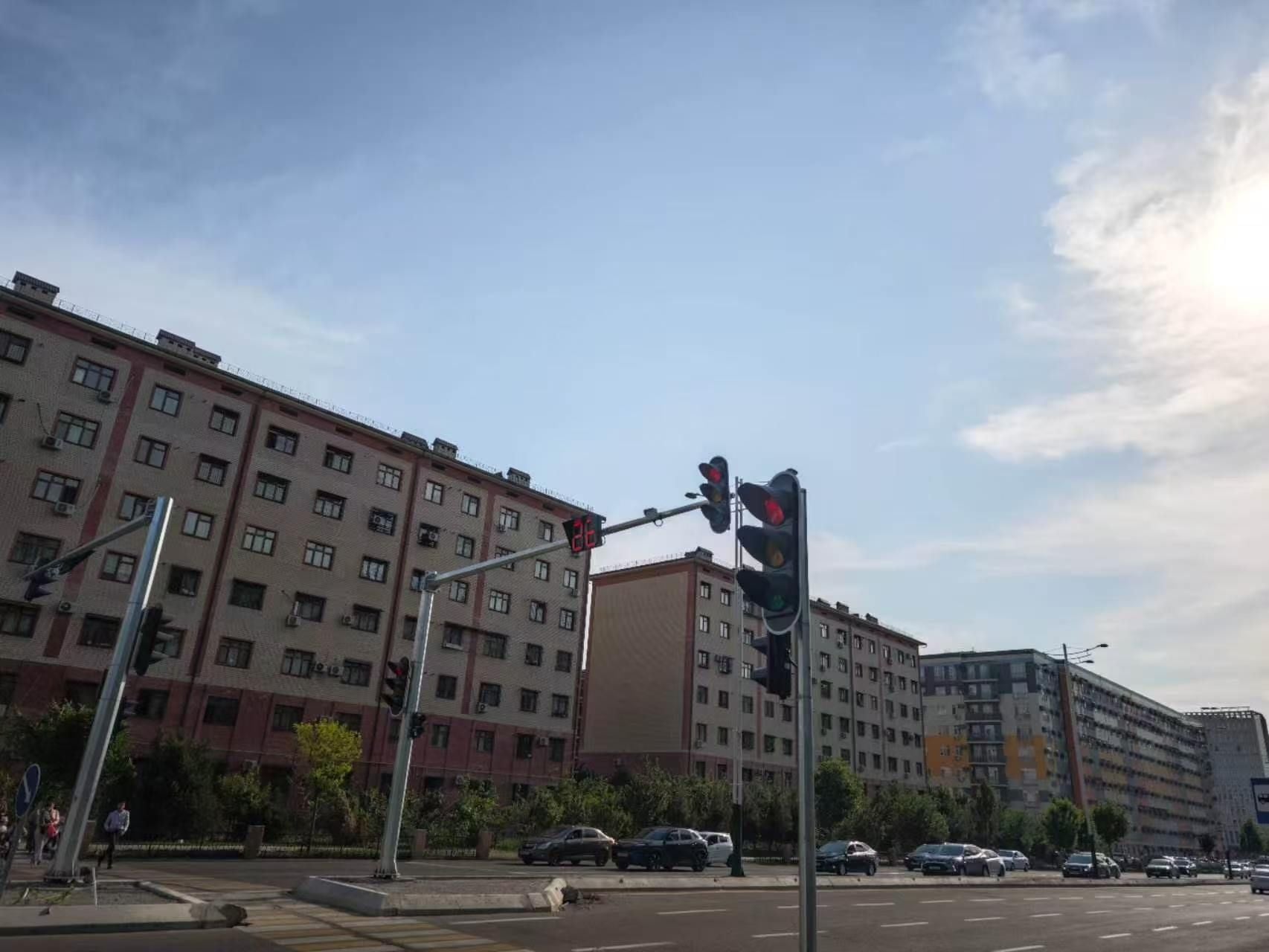
Intersection STOP-BAR + advance Detection System
Advance Pre-Radar Detection, STOP-BAR Presence Detection, Non-Intrusive Traffic Sensing, Loop & Geomagnetic Sensor Replacement, Pre-Emptive Signal Induction, All-Weather Lane-Level Detection
Modern intersections widely adopt advance pre-detection signal logic, different from conventional forward detection. Traditional in-pavement loop coils and geomagnetic sensors require destructive road construction, deliver unstable performance in harsh weather and have short service life. These defects fail to support high-precision real-time detection for standard STOP-BAR stop-line monitoring and upstream advance traffic induction. This STOP-BAR + Advance Detection System adopts millimeter-wave radar to fully replace conventional loop and geomagnetic sensors. It enables non-intrusive, 24/7 all-weather detection of vehicles, pedestrians and cyclists at stop lines and upstream advance zones, outputting low-latency lane-level data on vehicle presence, stop status, arrival trends and traffic volume for reliable signal controller triggering.
Millimeter-wave radar provides reliable, continuous traffic detection in all weather and lighting conditions. By monitoring vehicle arrivals, queue lengths, and departures in each lane, the system delivers accurate real-time data to signal controllers for demand-responsive green timing. This improves intersection efficiency while reducing unnecessary stops, delays, and traffic safety risks.
Pre-Emptive Sensing, Adaptive Signal Control
STOP-BAR stop-line and upstream advance detection is the core of modern intersection signal timing. Traditional buried loop and geomagnetic sensors are vulnerable to rain, snow, fog and low-light environments. Long-term pavement pressure and vehicle rolling cause aging and frequent failures, resulting in intermittent data and inaccurate signal decisions. The radar solution adopts pole-mounted non-intrusive deployment with no pavement cutting or buried works. It supports flexible software-defined detection zones, covering STOP-BAR stop-line parking areas and upstream advance arrival areas. It stably detects vehicle presence, queue formation and traffic flow in all weather, supporting green extension, red-light stop verification and traffic trend analysis, and improving overall signal control accuracy and stability.
System Architecture
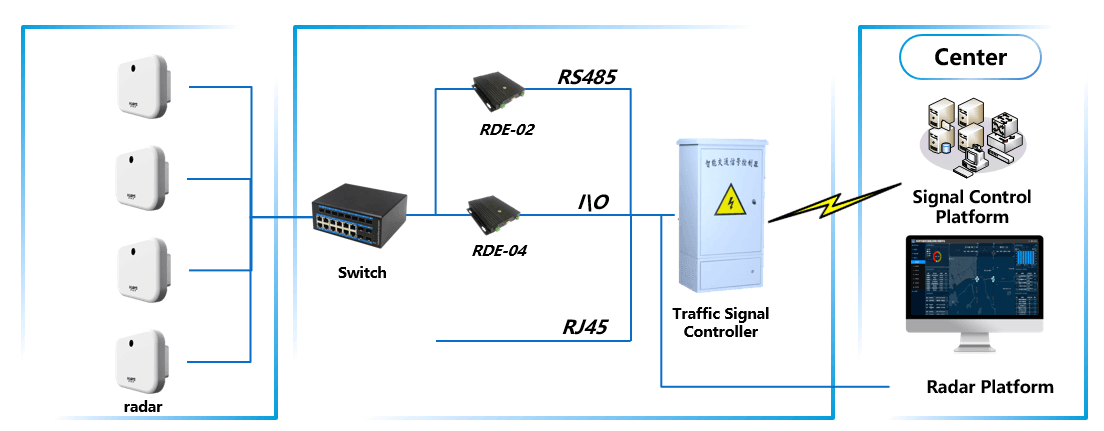
The system adopts a three-tier closed-loop framework: Sensing – Processing – Application, enabling data-driven adaptive signal control.
Sensing Layer: Pole-mounted radar units cover STOP-BAR stop lines and upstream advance detection zones. Sensors collect vehicle trajectory and traffic volume data, aggregated to generate high-quality raw sensing inputs.
Processing Layer: Data processor provides standard interfaces (RS485, I/O, RJ45) for signal control infrastructure, performing data pre-processing and protocol conversion.
Application Layer: Signal control platform supports remote monitoring and timing decisions. The big data platform merges radar and signal data for visualization, performance assessment and equipment maintenance, closing the loop of "Sensing – Intelligent Control – Data Empowerment".
Challenges and Applications
Challenges Intersections face notable limitations when relying on traditional buried detection for STOP-BAR and advance zone monitoring: Fixed signal timings fail to adapt to fluctuating traffic, resulting in wasted green intervals and queue spillbacks Loop coils require pavement cutting, difficult repairs and fixed detection boundaries Lack of consistent all-weather detection to support dynamic inductive operation Unable to supply lane-level presence data for spillback mitigation and advanced control logic Disconnected signal, guidance and command systems create data silos that restrict coordinated optimisation These pain points drive demand for all-weather radar sensing, shifting signal operation from fixed timing to data-driven adaptive control. Applications
-
Non-intrusive Virtual Loops No pavement excavation required. Pole-mounted hardware supports flexible software-defined detection zones, cutting construction and maintenance costs.
-
High-Precision STOP-BAR Presence Detection Virtual detection zones deliver stable, all-weather occupancy and vehicle presence triggers for signal control, unaffected by lighting or precipitation.
-
Pre-emptive Dynamic Inductive Control Signal controllers adjust green intervals in real time using advance arrival and stop-line queue data, eliminating unused green phases and improving traffic throughput.
-
Data-Driven Evaluation & Timing Tuning Continuous analysis of traffic volumes, occupancy and queue conditions generates reports and trend analysis to support timing optimisation and operational assessment.
All-Weather Precision Sensing
Millimeter-wave radar forms the core of the STOP-BAR + Advance Detection System. It delivers consistent detection of vehicle arrivals, queues and departures across all lanes, independent of light levels, rain, snow or fog. The sensor outputs reliable presence, occupancy and queue length data. The radar continuously tracks road user position, speed and trajectories for vehicles, bicycles and pedestrians, establishing a complete real-time data foundation for signal adjustment and road safety improvements.
Dynamic Inductive Control
Using real-time radar data on incoming traffic and queue dissipation, signal controllers adjust directional green durations dynamically. Green lights extend during heavy traffic to maintain continuous vehicle flow and terminate promptly once queues clear to reduce idle phases. By matching green time allocation to actual traffic demand, the system optimises adaptive signal timing, lifting intersection capacity and improving the utilisation of signal cycle resources.
Problems We Solve in Intersection STOP-BAR + Advance Detection System
Traditional signalised intersections commonly operate on fixed timings derived from historical data, lacking awareness of real-time vehicle arrival and queue clearance patterns. This creates mismatched capacity: lightly trafficked approaches waste green time while congested directions suffer queue spillbacks, increasing delays and emissions. Hurys radar sensors supply all-weather, high-precision data for vehicle presence, queue length and movement trajectories, upgrading signal operation from static timing to dynamic inductive control.
-
Fixed timings cannot react to live traffic variations — schedules are pre-set from historical averages without visibility of real arrival and queue behaviour, creating persistent mismatches between green duration and actual demand.
-
Wasted green time coexists with queue spillbacks — empty green phases on low-volume lanes coincide with insufficient green time for congested approaches, generating dual efficiency losses within the same intersection.
-
Absence of dependable all-weather detection — video and loop sensors lose reliability during rain, fog, snow or darkness and cannot deliver continuous stable inputs for signal control.
-
Traditional loop installations require road excavation and frequent maintenance — pavement cutting leads to lengthy construction periods and traffic disruption. Buried coils degrade under vehicle loading and ground movement, pushing up replacement and servicing costs.
-
No trusted low-latency real-time data for timing refinement — without granular live traffic measurements, operators lack objective evidence to implement fine-tuned dynamic signal adjustments.
Radar Detectors Make Signal Control Truly "Inductive"
Hurys radar sensors stream real-time vehicle arrival, queuing and departure data to enable dynamic green timing aligned with live traffic conditions. Core Capabilities All-weather reliable sensing — immune to rain, snow and fog; provides vehicle presence, queue and trajectory data Flexible virtual loop configuration — no pavement works; detection zones defined via software Pre-emptive dynamic inductive control — detects arrival and queue clearance, extending or truncating green phases to eliminate waste Multi-dimensional data output — traffic volume, occupancy, queue length and trajectories support signal evaluation and optimisation Non-intrusive, low-maintenance deployment — pole-mounted installation, no road cutting, long service life and minimal operational overhead Open interface compatibility — supports I/O, RS485 and RJ45, integrating seamlessly with mainstream traffic signal controllers The technology transforms signal control from passive operation to proactive traffic management, boosting intersection efficiency, cutting delays and emissions, and enabling fully data-led traffic operations.