Intersection STOP-BAR Detection System
All‑weather radar sensing,Virtual loop radar detection,Radar dynamic inductive control,Radar‑enabled multi‑dimensional data
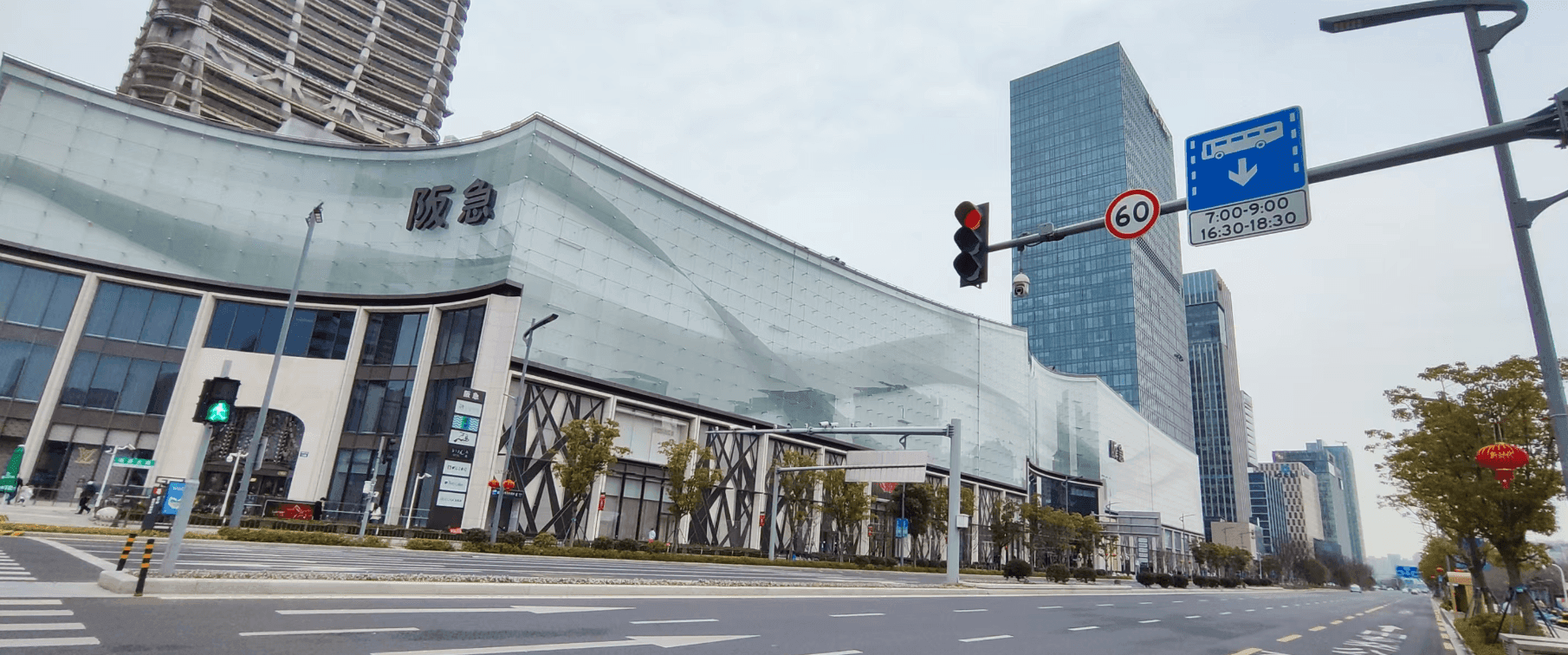
Traffic signal control at intersections is a core challenge in urban traffic management. Fixed‑time timing plans cannot respond to real‑time traffic fluctuations, leading to a serious mismatch between green time and actual demand — congested approaches suffer from queue spillback, while light‑traffic approaches waste green with no vehicles passing. This not only wastes capacity but also increases delay and emissions, making it a primary cause of urban congestion. Our system focuses on leveraging millimeter‑wave radar to provide real‑time detection of vehicle presence, queue length, and trajectories, and delivering precise, low‑latency data to signal controllers for dynamic, demand‑responsive timing optimization, thereby improving intersection efficiency and operational order.
Radar‑based detection systems ensure reliable and continuous traffic data collection in all weather conditions. By accurately detecting vehicle arrival, queue length, and departure status per lane, they enable signal controllers to make smarter decisions and achieve dynamic green timing. This not only improves intersection efficiency but also reduces stops, delays, and accident risks.
Accurate Sensing, Smarter Control
Accurate, real‑time traffic sensing is the prerequisite for effective intelligent signal control. Conventional detection technologies such as loops or video systems are often limited by weather conditions, high maintenance costs, or restricted field of view.
Radar‑based inductive detection offers a robust and forward‑looking alternative, providing precise, all‑weather vehicle presence, queue length, and trajectory data. It enables signal timing to dynamically respond to actual traffic demand, reducing stops and delays while improving intersection efficiency. Moreover, radar detection requires no road excavation, is pole‑mounted for easy installation, and incurs low maintenance costs—offering a cost‑effective path for intelligent traffic management upgrades.
System Architecture
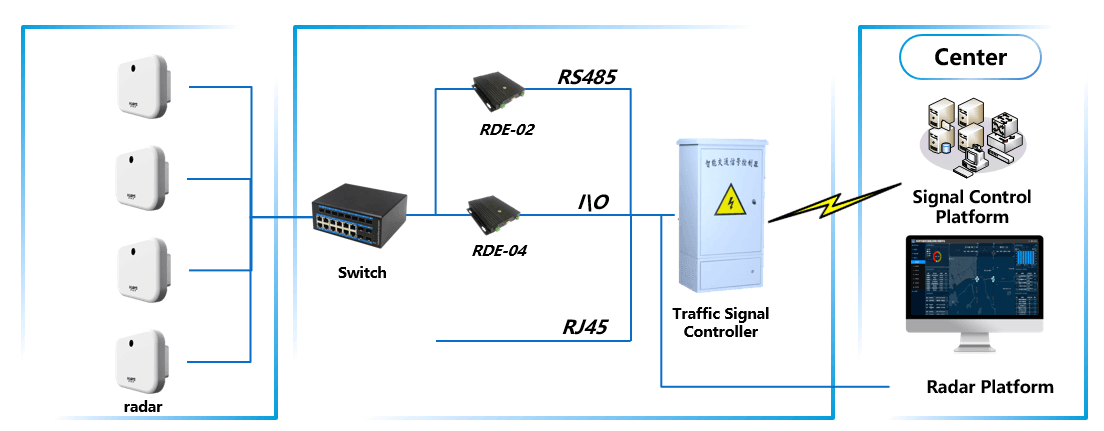
Sensing layer – Wide‑area radar detectors at intersections collect vehicle trajectories and traffic volume, aggregated via a switch to provide accurate raw data input.
Processing layer – A data processor provides standard interfaces (RS485, I/O, RJ45) to the signal control system for data pre‑processing and protocol conversion.
Application layer – The signal control platform enables remote supervision and decision‑making; the RTP big data platform fuses radar and signal data for visualization, evaluation, and intelligent O&M, closing the loop of “perception – intelligent control – data empowerment”.
Challenges and Applications
Intersections face multiple challenges due to the limited sensing capabilities of traditional signal control.
-
Fixed timing fails to adapt to traffic fluctuations, causing wasted green and queue spillback
-
Traditional loops require road excavation, high maintenance, and fixed placement
-
Lack of all‑weather accurate sensing to support dynamic control
These challenges call for all‑weather accurate radar‑based sensing to shift signal control from fixed timing to data‑driven adaptation.
-
Non‑intrusive virtual loops No road excavation required; pole‑mounted with flexible detection zone configuration, reducing installation and maintenance costs.
-
High‑precision presence detection Virtual loops provide all‑weather, stable occupancy and presence data for signal control, unaffected by weather or lighting.
-
Dynamic inductive control The signal controller adjusts green timing in real time based on queue and arrival data, eliminating wasted green and improving flow.
-
Data‑driven evaluation and optimization Deep analysis of volume, queue, and occupancy data generates reports and trend comparisons to support timing optimization and performance evaluation.
All‑Weather Precision Sensing
The inductive control system uses millimeter‑wave radar as its core, providing all‑weather accurate detection of vehicle arrival, queuing, and departure across all lanes — unaffected by lighting, rain, snow, or fog. It delivers reliable presence, occupancy, and queue length data. Simultaneously, the radar continuously tracks the position, speed, and trajectory of all road users, including vehicles, pedestrians, and cyclists, building a complete, real‑time data foundation for signal control and safety optimization.
Dynamic Inductive Control
Based on real‑time radar data on vehicle arrival and queue dissipation, the signal controller dynamically adjusts green time per direction — extending green during heavy flow for continuous release, and terminating green promptly after queue clearance to reduce wasted phases. By precisely matching green time with actual traffic demand, the system enables dynamic signal timing optimization, effectively improving intersection throughput and time‑resource utilization.
Problems we solvein Intersection STOP-BAR Detection System
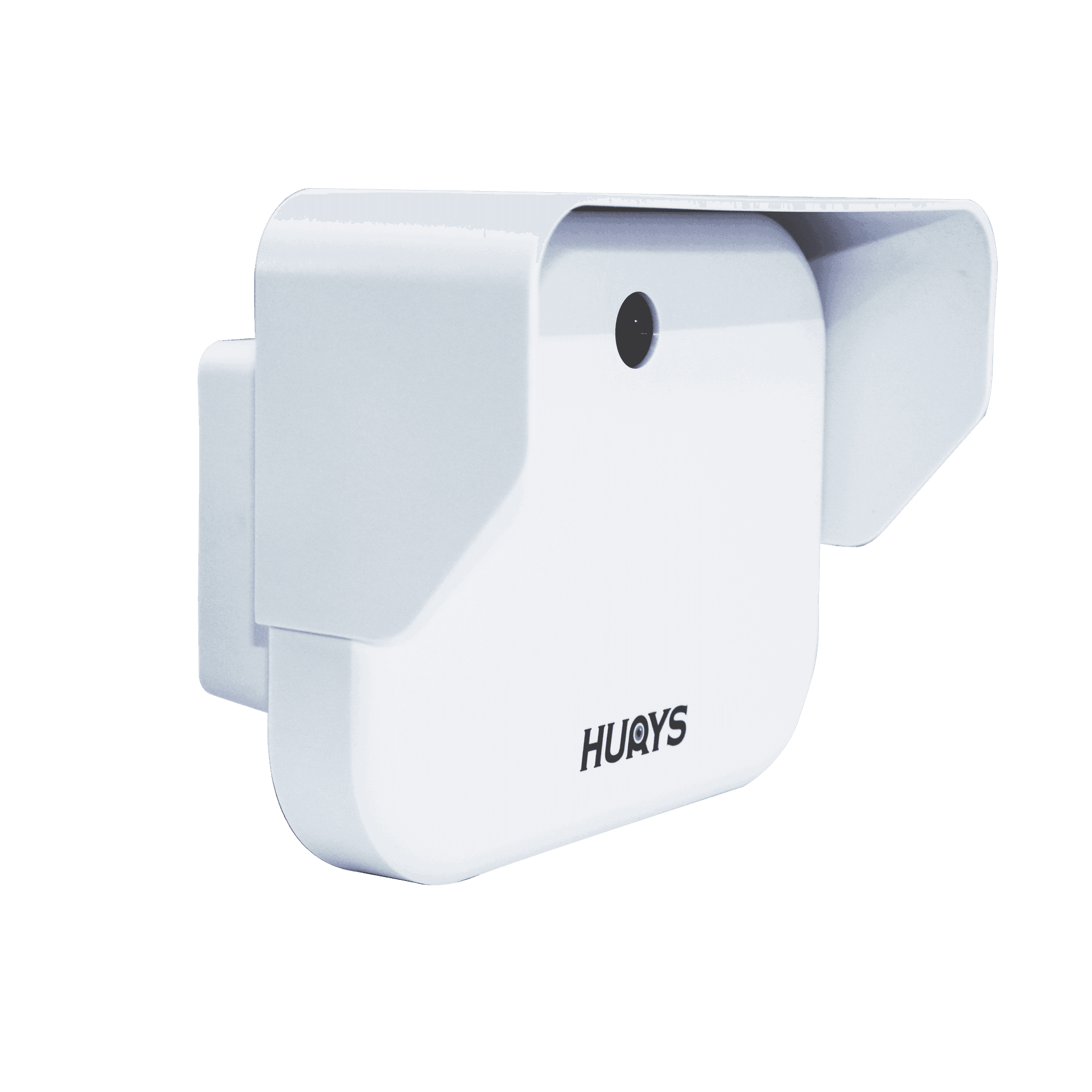
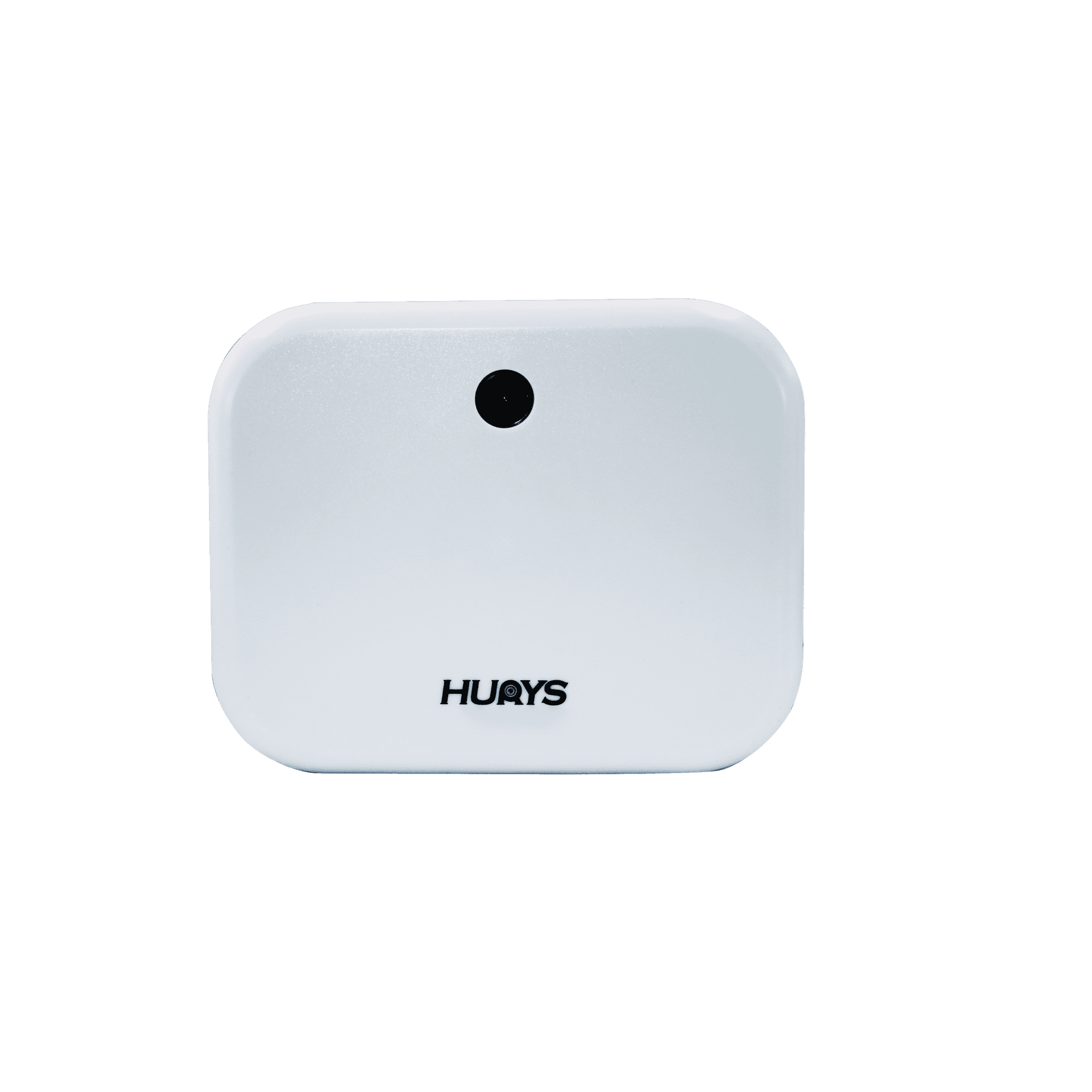
Conventional signalized intersections typically rely on fixed‑timing control, with parameters based on historical statistics — unable to sense real‑time arrival and dissipation patterns. As a result, the same intersection sees wasted green on light‑traffic approaches and queue spillback on congested ones — a severe mismatch of capacity, increasing delay and emissions. HURYS radar sensors provide all‑weather, high‑precision vehicle presence, queue length, and trajectory data, upgrading signal control from static timing to dynamic inductive control.
-
Fixed timing fails to respond to real‑time traffic changes Timing plans are preset based on historical averages, with no awareness of actual arrival or dissipation patterns — resulting in a persistent mismatch between green time and real demand.
-
Wasted green coexists with queue spillback Green phases on light‑traffic approaches see no vehicles, while congested approaches lack sufficient green, causing queues to spill back — both types of efficiency loss occur at the same intersection.
-
Lack of all‑weather accurate sensing Traditional video or loop detectors drop in reliability during rain, fog, snow, or nighttime, failing to provide continuous and stable data input for signal control.
-
Traditional loops require road excavation and are difficult to maintain Loop installation requires cutting pavement, causing long construction periods and traffic disruption. They are also vulnerable to road settlement and vehicle wear, with high maintenance costs and difficult replacement.
-
No reliable real‑time data for signal optimization Without fine‑grained, low‑latency real‑time data, signal timing optimization lacks objective evidence, making dynamic adjustment and refined control unattainable.
Radar Detectors Make Signal Control Truly "Inductive"
radar detectors provide real‑time vehicle arrival, queue, and departure data, enabling dynamic green timing that matches actual traffic flow. Core Capabilities:
-
All‑weather accurate sensing – Unaffected by rain, snow, or fog; delivers presence, queue, and trajectory data
-
Flexible virtual loop deployment – No road excavation; software‑defined detection zones
-
Dynamic inductive control – Real‑time arrival and dissipation sensing; extends or terminates green to eliminate waste
-
Multi‑dimensional data support – Provides volume, queue, occupancy, trajectory for signal evaluation and optimization
-
Non‑intrusive low‑maintenance installation – Pole‑mounted, no cutting, long life, low O&M costs
-
Open interface compatibility – Supports I/O, RS485, RJ45; adapts to mainstream signal control systems This shifts signal control from passive to proactive, improving intersection efficiency, reducing delays and emissions, and enabling data‑driven traffic management.